The inspiring masculine end to Kenneth Brenaugh’s production of Henry V.
Non Nobis Domine
Reply

The inspiring masculine end to Kenneth Brenaugh’s production of Henry V.
Some positive news for authors.
This is an interesting account of how the university English Department drifted from its original purpose, which is the study and assessment of the Canon of English literature, but there is no doom prediction in the survey. Indeed, Adam Walker senses a renewed interest in reading and literature, but outside the university.
The video below presents an interesting discussion about Netflix’s coming version of Jane Austen’s Pride and Prejudice as compared with previous productions. I made the following comment about the previous productions:
The 1980 version with Elizabeth Garvie and David Rintoul lacks the production values of the 1995 and 2005 versions, but it is more faithful to the story and the characters. Colin Firth may appeal to the female audience, but he does not play Jane Austen’s Darcy. Though without the same appeal, David Rintoul is closer to Austen’s Darcy. I invite people to actually read Jane Austen’s descriptions of Darcy and the dialogue he has in the story. The same holds for Elizabeth Garvie’s Lizzie, who maintains her sweetness and refinement while tearing Darcy apart in the drawing room scenes. Jennifer Ehle’s Lizzie is too vulgar to be an authentic Jane Austen Lizzie. As for Mr Collins, the two actors who played the part in the later versions made a farce of the character, particularly David Bamber in the 1995 version. Mr Collins was a pompous fool, but, as Charlotte Lucas pointed out, he was educated with a respectable position in society. He didn’t eat like a grunting pig. I regularly watch the 1980 version and enjoy it each time.
My latest novel in the Sixties Series, LOVE IN THE COUNTERCULTURE, is ready for release on 29 June 2026. It’s all been put to bed.
I have decided to pause writing the next title, DREAMS TO NIGHTMARE, until I have attended to a long-overdue task of bundling revised and updated versions of the postings, essays, and presentations on Edmund Burke’s political philosophy that I have given at meetings and conferences over the last ten or so years. More details, plus a table of contents, will be provided in due course.
Anticipated release is December 2026

This is a very good look at the recent developments in self-publishing and suggestions of how to manage them. The YouTuber is a successful self-publisher.
Something weird is happening in Self-Publishing.
This is a thoughtful analysis of the quality of present-day books. Significant is the number of books being published every year. This last year, according to Jared Henderson, 4 million books were published. This is an insane number compared with ten years ago. The reason for the number is the ease with which anyone can publish a book, a trend made worse over the last two years by AI. Naturally, there’s a lot of rubbish among that number. Indeed, Henderson claims the vast majority are slop. However, among that bubbling slop that good booksellers can clear away, he asserts good-quality books can be found. I’m happy to have my books examined in this regard.
I have had covers for two titles in my Sixties Series professionally designed. One is for Love in the Counterculture, which is due for release at the end of June 2026. The second is for The Counterculture Goddess, published in 2025 and revised in 2026, which I have just received.
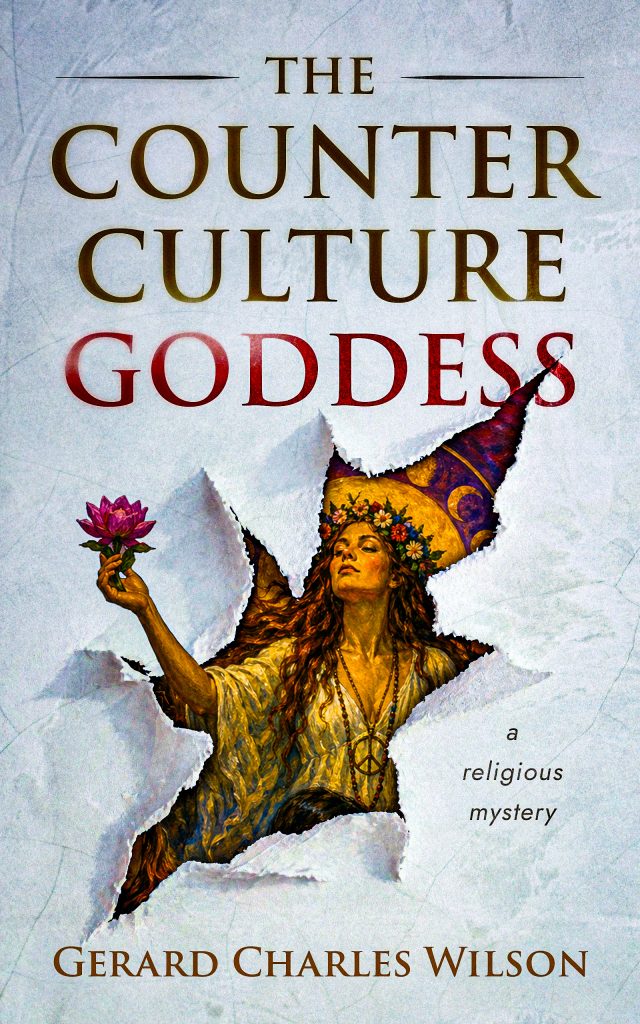
I have also provided a character and other information sheet for readers. My plan is to provide a similar information sheet for all my fiction titles.