The video below, providing writing advice for new writers, has scored 1.4 million views since it was posted 7 years ago. Alexa Donne doesn’t mince words, gives brutal advice to new writers who may be fantasising about their work, but is hilarious in doing so.
Category Archives: Author
Taking care of the first 20 pages
There are hundreds of YouTube channels giving advice about writing. The Bookfox channel is one of the better ones. In this video, advice for the first 20 pages of your novel is given.
*****
Unless you want your book to bomb, do THIS in the first 20 pages.
Self-editing for self-publishers
This is an edition of Joanna Penn’s highly regarded podcast. The section on self-editing begins at the 29-minute mark:
How can you improve your self-editing process? How can you find and work with professional editors and beta readers? How do you know when editing is done and the book is finished? With Joanna Penn.
Writing us out of our civilisational collapse
From the Novel Marketing channel:
There’s a culture shift underway that most authors aren’t seeing. Even traditional publishers can’t figure out why their titles are resonating. If your book isn’t selling, it could be a cover or craft problem, but it might be a zeitgeist problem. In this week’s episode, you’ll hear from fantasy and LitRPG author Seth Ring. We discuss the biggest cultural shift in storytelling in two decades and what it means for your books.
A dark age of literature?
That’s the question that Joomi Kim asks in this excellent presentation of the modern novel. For years, I have only had to get a whiff of wokism in books, movies and television, and off they go. I haven’t bothered to delve into novels, for example, to justify my action. I was confident I didn’t have to. In this presentation, Joomi Kim does just that. She discusses a range of book titles, many of which are high on book award lists, showing that they are all in the same unexamined woke bubble. At the end of this video, I was inclined to answer yes to her question.
Traditional publishing vs Self-publishing
Here’s a video that discusses the misconceptions about self-publishing. A salient point is that some self-publishers earn hundreds of thousands of dollars in a year. Alas, I’m not one of those.
Writing update
I would not be surprised if many visitors to my website (there are many) get the impression that I do nothing but post comments on my blog. Actually, the opposite is true. A small percentage of my time is spent providing links and making brief comments. Most of my time is spent on my writing, specifically on my novel writing.
My daily routine (except Sunday) is to begin writing at 8 am and finish around 12 pm. By that time, my brain is exhausted. In the afternoon, I attend to domestic matters, post links to comments and YouTube videos, do research, and sometimes revise my already published books. This last is a constant process that covers small adjustments to the text and the rooting out of typos, etc.
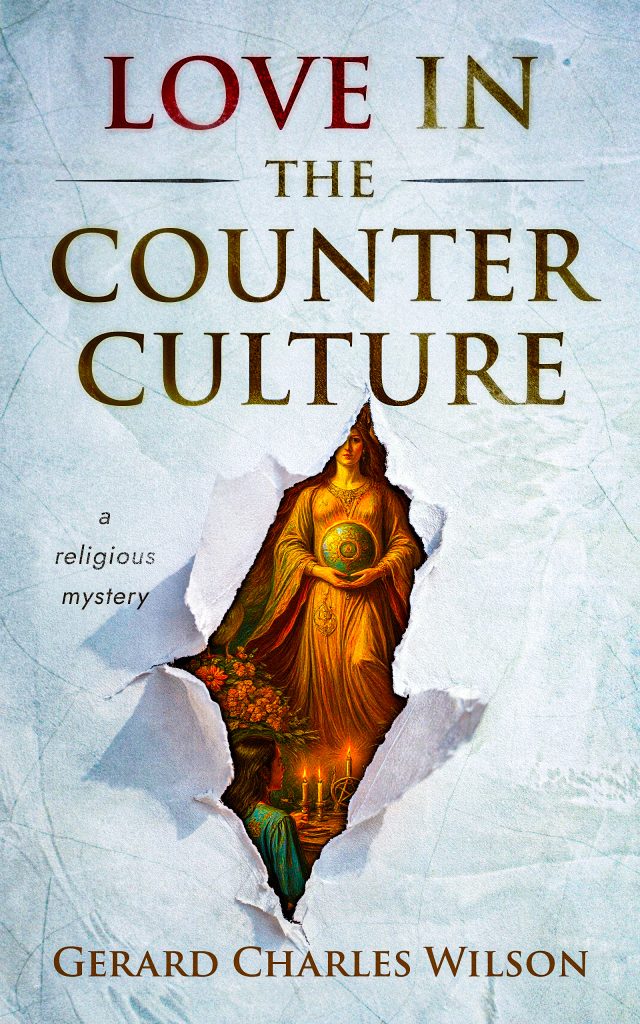
My present writing project is Book 5 of the Sixties Series, Love in the Counterculture. I’ve almost finished the first draft. Against most professional advice, I’m one of those writers who constantly revises as he writes, not only what’s been written the previous day but also the thus-far completed draft.
I find this necessary because my novels are long – more than 100,000 words. I need to keep the course of the story in mind. I’m at the 120,000-word mark with Love in the Counterculture. It will take at least another 20,000 words to finish the story. I have a tentative cover which I may replace by the time I’m ready to upload to Amazon and Draft2Digital (D2D). I would welcome comments about it.

Introduction to my YouTube Channel
I made the introduction to my YouTube channel below in June 2024. I will update it in the following months. The update will include an adjustment to my list of books. In the meantime, I have published the fourth book in my Sixties Series, The Counterculture Goddess, with the fifth, Love in the Counterculture, due in June. I have also republished Bitter in Love under its original title, Editing Constancy: A Jane Austen Story.

*****

Women dominate culture
The video below shows how pervasive female influence and control are across the arts world – through publishing, television, media, advertising, etc. If you’re a male (like me) writing stories and characters that men are traditionally interested in, you can forget about being published by a traditional publisher – no matter how excellent your writing is. If you’re a male who finds the latest offerings in bookshops, television and cinema feminist and boring, you’ll find the the explanation here. This video is worth rewatching for its explanatory value.
1960s Part 2
Part 2 in Mervyn Bendle’s excellent series on the 1960s. Highly recommended reading.

Liza’s Journey: Australia in the Sixties, Part 2
Mervyn Bendle, Quadrant, Dec 13 2025
The Great Chasm. As we saw in the first installment of this series, Liza was beginning her university studies as a ‘great chasm’ had opened up between the optimism and self-belief of the broad mass of Australians and the nascent Intelligentsia, which was invariably critical of its own country. It appears this split had its origins in the tendency of frontier and nation-building societies, like Australia, to value pragmatism and the ability to engage productively with the concrete here-and-now, rather than be pre-occupied with more abstract matters like culture, ideology, and theories. This nation-building was exemplified in the post-war period by massive immigration, the Education Revolution, and colossal infrastructure development, spearheaded by the Snowy Mountains Hydro-Electric Scheme (1949-74).

The Australian Legend. Such activity saw the resurgence of nationalism, a native intellectual tradition that found much to be valued in Australian history and culture. The key text was The Australian Legend (1958) by Russel Ward, which argued that the shared hardship that characterised Australia’s convict and mining origins and the ‘frontier experience’ of the outback bushman had generated a heritage of egalitarianism, co-operation, and mateship that had manifested itself in the Anzac tradition, and was being called upon again in the post-war period as Australians undertook the immense task of transforming their country into a thriving modern nation. This ‘origin story’ of Australian history became very influential while Liza was at university, and later became a hated target of the New Left. This radical neo-Marxist cohort was a by-product of Australia’s passage into post-industrialism, and especially of the Education Revolution, and it quickly established a stranglehold over Australia’s intellectual life and culture.

Mass Immigration. As a nation-building country, Australia benefited greatly from the turmoil in post-war Europe. The Iron Curtain had descended, condemning most East Europeans to a totalitarian fate; 8 million Germans were driven from their homes as their devastated nation was chopped in two; Italy, Greece, and of Yugoslavia were in chaos, and Britain was on the verge of bankruptcy. Massive numbers of migrants began streaming out, determined to start life afresh ‘down under’, including 170,000 Displaced Persons (or ‘refos’ as they were affectionately known). Most were assisted by the Federal Government on the basis that they agreed to stay for at least two years and work in the jobs available. Many found work with the Snowy Mountains Scheme (and incidentally pioneered the snow-skiing industry in Australia). Others opened shops and businesses, worked in department stores, factories, heavy industry, or as labourers and farmhands.
Post-Industrialism All of this was happening as Australia was transformed into a post-industrial society, i.e., one that has transitioned from a manufacturing-based economy to one centred on services, information processing, and knowledge work. This involves a shift from a ‘blue-collar’ to a ‘knowledge worker’ workforce, with an emphasis of theoretical knowledge over practical know-how, and consequently a greater focus on tertiary over technical education. It also involved major changes in gender roles, rights and responsibilities, birth rates, and enhanced opportunities for women in education, employment and political life.

State government typing pool in Brisbane, circa 1962
Education Revolution. Post-industrialism made enormous demands on the education system. And this happened at a time when migrant children were adding significantly to the Baby Boomer demographic bulge. Consequently, Government expenditure on education tripled as a proportion of GDP between 1950 and 1970. Primary and secondary enrolments increased by 11% and 45% respectively in the Sixties alone.