There are hundreds of YouTube channels giving advice about writing. The Bookfox channel is one of the better ones. In this video, advice for the first 20 pages of your novel is given.
*****
Unless you want your book to bomb, do THIS in the first 20 pages.
This is an edition of Joanna Penn’s highly regarded podcast. The section on self-editing begins at the 29-minute mark:
How can you improve your self-editing process? How can you find and work with professional editors and beta readers? How do you know when editing is done and the book is finished? With Joanna Penn.
That’s the question that Joomi Kim asks in this excellent presentation of the modern novel. For years, I have only had to get a whiff of wokism in books, movies and television, and off they go. I haven’t bothered to delve into novels, for example, to justify my action. I was confident I didn’t have to. In this presentation, Joomi Kim does just that. She discusses a range of book titles, many of which are high on book award lists, showing that they are all in the same unexamined woke bubble. At the end of this video, I was inclined to answer yes to her question.
This is an excellent interview that gives an accurate account of how traditional publishing works. It’s a long interview, but worth watching to the end.
Here’s a video that discusses the misconceptions about self-publishing. A salient point is that some self-publishers earn hundreds of thousands of dollars in a year. Alas, I’m not one of those.
I would not be surprised if many visitors to my website (there are many) get the impression that I do nothing but post comments on my blog. Actually, the opposite is true. A small percentage of my time is spent providing links and making brief comments. Most of my time is spent on my writing, specifically on my novel writing.
My daily routine (except Sunday) is to begin writing at 8 am and finish around 12 pm. By that time, my brain is exhausted. In the afternoon, I attend to domestic matters, post links to comments and YouTube videos, do research, and sometimes revise my already published books. This last is a constant process that covers small adjustments to the text and the rooting out of typos, etc.
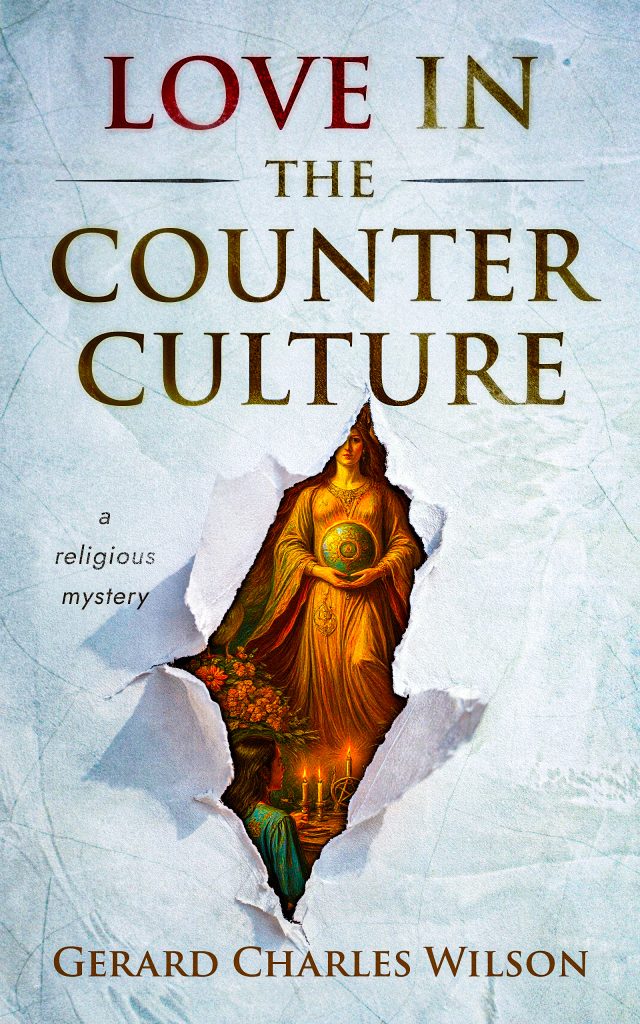
My present writing project is Book 5 of the Sixties Series, Love in the Counterculture. I’ve almost finished the first draft. Against most professional advice, I’m one of those writers who constantly revises as he writes, not only what’s been written the previous day but also the thus-far completed draft.
I find this necessary because my novels are long – more than 100,000 words. I need to keep the course of the story in mind. I’m at the 120,000-word mark with Love in the Counterculture. It will take at least another 20,000 words to finish the story. I have a tentative cover which I may replace by the time I’m ready to upload to Amazon and Draft2Digital (D2D). I would welcome comments about it.
I made the introduction to my YouTube channel below in June 2024. I will update it in the following months. The update will include an adjustment to my list of books. In the meantime, I have published the fourth book in my Sixties Series,The Counterculture Goddess, with the fifth, Love in the Counterculture, due in June. I have also republished Bitter in Love under its original title, Editing Constancy: A Jane Austen Story.
The video below shows how pervasive female influence and control are across the arts world – through publishing, television, media, advertising, etc. If you’re a male (like me) writing stories and characters that men are traditionally interested in, you can forget about being published by a traditional publisher – no matter how excellent your writing is. If you’re a male who finds the latest offerings in bookshops, television and cinema feminist and boring, you’ll find the the explanation here. This video is worth rewatching for its explanatory value.
It’s been a busy year in writing scams (but then what year isn’t?). From the new AI marketing scams, to nasty contract clauses, to publishers behaving badly, to the biggest copyright infringement restitution in history, Writer Beware has been on the beat. If you missed any of our posts, here’s your chance to catch up.
On a personal note, it’s always instructive for me to do these overviews, not just because they help me take stock of how well Writer Beware is fulfilling its mission, but also because looking at the trends and changes of the year just past can give me a sense of what I’ll likely be focusing on in the year ahead. I was a little surprised, for example, to see how much space I devoted to generative AI.
Also somewhat surprising: scams are what most people think of when they think of Writer Beware, but my posts about scams actually comprised less than half of what I published in 2025. Just a reminder that “beware” applies to much more than literary fraud.
A New “Beware”: AI-Driven Nigerian Marketing Scams
Ramping up more quickly than any scam I’ve ever seen, Nigerian marketing scams burst on the scene in the late spring and early summer of 2025, in the form of highly personalized emails from alleged marketing experts with often odd Gmail addresses and a suspicious lack of web presence. Authentic-seeming (AI-generated) plot details, bolstered by (also AI-generated) over-the-top praise, made it seem the purported marketer really had read the books and that the promotional services on offer had been carefully targeted. For payment, writers were referred to Nigerian third parties, described as “assistants” or “payment processors”, via job sites like Upwork or bank transfers to accounts at Wells Fargo and Lead Bank.