
What is the Australian character and culture?

Many Australians are reacting fiercely today to threats to Australia’s character and culture from ideological or national groups. What character and culture, some are asking? Indeed, the more extreme deny that such a character and culture exist. In the final chapter of my book, PRISON HULK TO REDEMPTION, I sketch what I understand as Australia’s character and culture.

*****
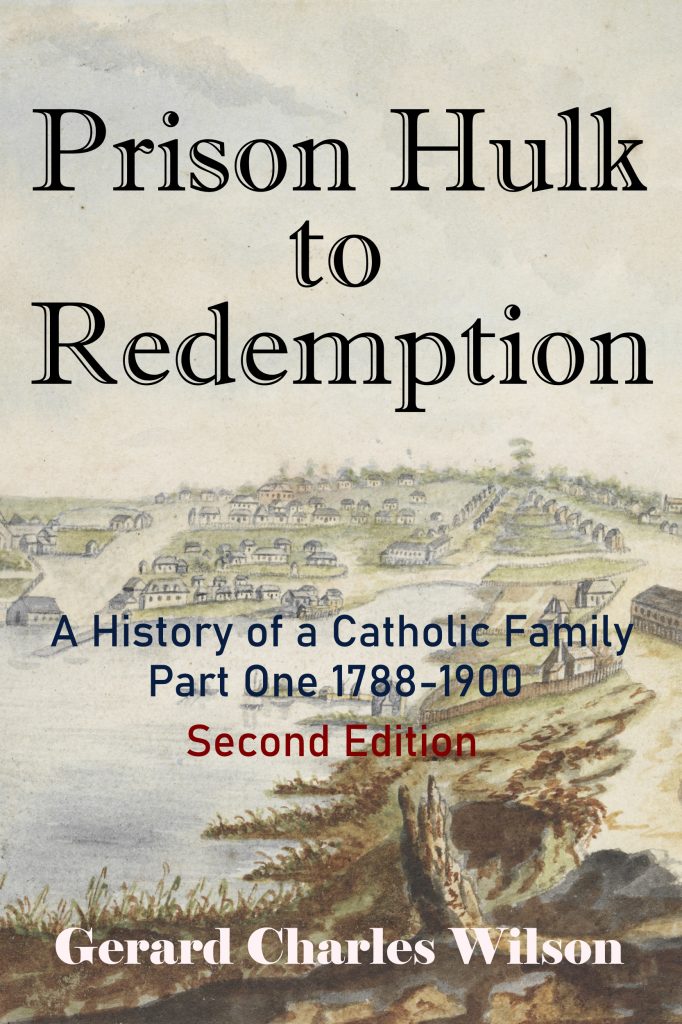
An excerpt from chapter 19, ‘Cultural Continuities in 1900’, Prison Hulk to Redemption, available through Amazon.

From the outset [of Prison Hulk to Redemption], I endeavoured to depict a new, independent nation emerging from Captain Phillip’s seminal act of planting the Union Jack in the soil of Sydney Cove. In a remarkably short time, the inaugural members of this new nation began to refer to their land and themselves as Australia and Australians, though still closely connected to their origins in the British Isles. The fiery and intemperate William Charles Wentworth embodied those who experienced no doubts about themselves and the new nation they were forging. But what, precisely, does this Australianness entail?

Australianness represents a profound modification of Britishness, the unifying culture of the British Isles—England, Scotland, Wales, and Ireland—rooted in the broader culture of Christian Europe. Although Australians retained many traditions, customs, and social and political institutions from Great Britain, as well as the arts and literature, and were content to do so, their experiences led them to develop fundamentally distinct identities from their counterparts in the British Isles. The varied physical environment contributed to the emergence of a unique, independent expression of Britishness. Consequently, all traditions, customs, and institutions brought over by the First Fleet were transformed, regardless of how subtle these changes might sometimes have been. Although this transformation began as soon as Captain Phillip planted the British flag, it was not until the 1880s that overseas observers began to notice a distinctly Australian character.

Continue reading →

Concocted history

It’s in vogue for the woke class – appointing coal black actors to play characters from lily-white stories, sometimes centuries-old, and concocting history as a demonstration that objections are racially motivated. The American feminist program ‘The View’ is shamelessly guilty of this propaganda trick. Of course, in Australia we have battalions of government-funded academics busy spinning the most preposterous ‘histories’ of the Aboriginals.

Writing us out of our civilisational collapse

From the Novel Marketing channel:
There’s a culture shift underway that most authors aren’t seeing. Even traditional publishers can’t figure out why their titles are resonating. If your book isn’t selling, it could be a cover or craft problem, but it might be a zeitgeist problem. In this week’s episode, you’ll hear from fantasy and LitRPG author Seth Ring. We discuss the biggest cultural shift in storytelling in two decades and what it means for your books.

The political campaign to replace Australian names with Aboriginal names

We’ve seen the latest woke campaign all over the place. The campaign is to replace Australian place names with Aboriginal names, or to name any area according to the Aboriginal tribal name. Government-funded SBS is the leader of this pure-gold woke endeavour, followed closely by the government-funded ABC and – wait for it – government-owned Australia Post. Australia Post urges its customers to include the Aboriginal place or area name in all their posts.

Changing place names is an essential part of the white-Aboriginal coup that aims to have all things Aboriginal permeate the Australian culture, whose foundations are European and British Isles. Of course, such a coup would not be possible without the complicity of the treacherous dominant political class.

Whitlam’s Aboriginal Land Rights Act

‘The Aboriginal Land Rights Act was a Whitlam-era ideological experiment premised on the fantasy that land transfer and autonomy would allow Aboriginal people to revert to a viable “traditional” existence inside a modern nation-state. Wadeye is the living wreckage of that idea.

‘Fifty years on, it has no real economy, no self-sufficiency, no civic order, and no credible path forward. Land has been handed over, and the result is not empowerment but stagnation, violence, and permanent dependency. Wadeye is not transitional. It is the end state of a policy that mistook symbolic restitution for governance. No government has been willing to confront or unwind the model, because any attempt at reform is immediately racialised and treated as illegitimate . . .

‘The Northern Land Council is not a marginal or impoverished body. It is one of the wealthiest statutory land councils in Australia, controlling vast territories, negotiating resource agreements worth hundreds of millions of dollars, and maintaining substantial financial reserves. It asserts authority over land use, access, and exclusion, yet disclaims any operational responsibility for safety, order, or civil peace on the land it controls.’ These are quotations from Robert Hill’s Quadrant article, Welcome to Wadeye.

Read the rest HERE . . .

Who were the Aboriginals? An examination minus the concoctions

Australia is one of the only places where humans maintained a hunter-gatherer lifestyle into the modern era. This makes it an invaluable window into humanity’s deep past—a window that is closing, writes Mungo Manic. This video explores the complexities surrounding the identity and history of Aboriginal Australians, particularly focusing on the distinction between contemporary Aboriginal Australians and the pre-colonial foragers. It delves into the impact of colonization on these communities, the ambiguity of Aboriginal identity, and the challenges faced in preserving the archaeological and cultural heritage of Australia’s forager past.

Written by Mungo Manic, read his piece here https://quillette.com/2025/01/25/the-…

The Myths of Indigenous History

Professor Nigel Biggar and Dr Stephen Chavura discuss the historical nonsense that is shoved down the public’s throats and is force-fed to our schoolchildren.

For examples of state indoctrination, there’s no need to go to Nazi Germany, the Soviet Union or Communist China. We have our own indefatigable Goebbelses, beginning with the government-funded ABC and SBS.